BBC TV 2005
The length of a movie is a relative thing. This one at eight hours viewed over a single day definitely left me with a tinge of disappointment because it ended too soon for me. It is a fifteen episode serial which was first shown twice a week and achieved a peak viewer-ship of seven millions and led the viewer figures in most of the episodes. The soap opera format is particularly appropriate since Dickens (1812-70) was targeting a mainstream audience and the novel was serialized in twenty segments in during 1852-3. It is a flawless film which sucks us into the enchanted vision of Dickens. It has the dignity, grace and balance of a painting and all the acting roles I can think of have been done with naturalness, sensitivity and realism. The English language flows limpidly and musically as it can only from British actors--between Dickens and the BBC the movie gives us a portrait of the language in its most native habitat. After seeing scores of American films or many modern British ones with their hard to decipher accents and colloquialisms, it is a delight to encounter English of such crystalline purity.
The case of Jarndyce vs. Jarndyce, over the inheritance of a considerable fortune has been going on for generations. There are many conflicting wills. Claimants have died and new ones have been born but the wheels of justice grind on with no conclusion in sight. The film captures the intertwining lives of a group of characters --claimants, lawyers, policemen, a rag and bottle merchant, contentious aristocrats, maidservants and butlers, an opium addict with a romantic past--caught in the background of pre-Victorian England. To spice things up we have a murder mystery. Each of the segments ends at a cliff-hanger and the suspense and the eagerness to know what comes next never falters.
In this process we get a glimpse of British society of the era and I believe an insight into the British temperament. The strictly hierarchical character of British society comes out very forcefully. Hierarchical and yet egalitarian as we see a police inspector invade the house of an aristocrat with aplomb in the course of his duties and all but arrest the lady of the house--with due respect and ceremony of course. In fact the the hierarchical and casteist structure in British India, with the white-man as a kind of super albeit unclean cast at the apex of the power structure, may reflect the almost militaristic-ally rigid composition of British society. We in India seem to be stuck more or less in the hoary and rusty judicial system depicted. Dickens is said to be a social realist and a critic of the society in which he lived but even so, the setup comes out as one in which law and order is well established and crime may not be committed with nonchalant assurance of impunity. The fear of the law and order machinery is clearly visible.
Dicken's macabre sense of humor is insidiously omnipresent even in the most serious moments. Bucket the police inspector enjoys a few glasses of choice wine at the expense of the newly murdered corpse. The characters belonging to the lower rungs of society are sketched with exaggerated brush strokes but even the crooks are lovable and interesting. At the heart I think is Dickens love for humanity in all it's manifestations. He draws the entire spectrum of humanity--both prince and pauper-- into his enfolding embrace. None is spared from his gentle barbs of satire.
The acting is uniformly brilliant. The three female leads are outstanding in their restrained charisma. There is not one in the galaxy of characters who can be faulted or who is less than memorable, in many cases the minor characters even more than the major ones. Guppy, Skimpole, Miss Flite, Smallweed, Krook, Tulkinghorn are each of them unmistakeable in their Dickensian ancestry and created here for us by a film-maker who knows his Dickens as well as he does film-making. One of the miracles of this film which makes it difficult to dispense praise is the fluidity of symbiosis which makes the machinery of the cast operate seamlessly like a lubricated machine. Well, half the credit goes to Charles Dickens for having created a universe growing so much out of it's native English soil that the actors slip into their roles as easily and comfortably as into a pair of worn shoes.
Friday, July 30, 2010


The Grey Zone
*Tim Blake Nelson *2001 *108m *
Of all holocaust films this one is the probably the closest close-up of the realities. This film is entirely takes place in a concentration camp. Set in Auschwitz-Birkenau, the action is in the midst of the Sonderkommando, the Jewish workforce, which, in return for a reprieve of four months, manned the day to day workings of the concentration camp. Their duties involve the "reception" of the human "cargoes", their undressing, hair-cutting, gassing and finally cremation in the ovens. The title probably refers to the moral choice faced by these commandos, who have to perform these ghoulish tasks on their own kith and kin, who are going to die anyway, in return for four extra months of life. To what extent have they sold their souls? The question is all the more sharply brought into focus in the shape of a girl who miraculously escapes the gassing process and these undeads risk their lives to save this child, who also is foredoomed under the circumstances. The torment of the kommandos culminates in this courageous act of redemption.
I am reminded of Hamlet, as he brushes aside Horatio's proposal to postpone events which seem headed for his death::
"Not a whit, we defy augury: there's a special providence in the fall of a sparrow. If it be now,'tis not to come; if it be not to come, it will be now; if it be not now, yet it will come: the readiness is all: since no man has aught of what he leaves, what is't to leave betimes?"
Of all holocaust films this one is the probably the closest close-up of the realities. This film is entirely takes place in a concentration camp. Set in Auschwitz-Birkenau, the action is in the midst of the Sonderkommando, the Jewish workforce, which, in return for a reprieve of four months, manned the day to day workings of the concentration camp. Their duties involve the "reception" of the human "cargoes", their undressing, hair-cutting, gassing and finally cremation in the ovens. The title probably refers to the moral choice faced by these commandos, who have to perform these ghoulish tasks on their own kith and kin, who are going to die anyway, in return for four extra months of life. To what extent have they sold their souls? The question is all the more sharply brought into focus in the shape of a girl who miraculously escapes the gassing process and these undeads risk their lives to save this child, who also is foredoomed under the circumstances. The torment of the kommandos culminates in this courageous act of redemption.
I am reminded of Hamlet, as he brushes aside Horatio's proposal to postpone events which seem headed for his death::
"Not a whit, we defy augury: there's a special providence in the fall of a sparrow. If it be now,'tis not to come; if it be not to come, it will be now; if it be not now, yet it will come: the readiness is all: since no man has aught of what he leaves, what is't to leave betimes?"
Gooseberries(1898)
Anton Chekhov (1860-1904)
Ivan Ivanich and Bourkin are caught in a heavy shower while walking in the countryside and seek refuge in the mansion of landlord Aliokhin who welcomes them warmly. Aliokhin does not seem to have bathed for ages and is dirtily clothed as he returns home from his farming duties.They all bathe and change and as they converse in the evening, Ivan narrates the story of his own brother, a government official who spent half his life single mindedly pursuing and finally achieving his dream of living in the countryside. He turns into a ridiculous caricature of a "country gentleman" with all the foibles, pretensions and pomposity. Chekhov here questions Tolstoi's view that all that a man requires is six feet of ground. By running away from his life in the city to an idyllic nest, a haven far from tension and worry, the character in the story, and by implication Aliokhin the host, have cut themselves from the stream of life, the battlefield which is our human destiny.
"It is a common saying that a man needs only six feet of land. But surely a corpse wants that, not a man. And I hear that our intellectuals have a longing for the land and want to acquire farms. But it all comes down to the six feet of land. To leave town, and the struggle and the swim of life, and go and hide yourself in a farmhouse is not life -- it is egoism, laziness; it is a kind of monasticism, but monasticism without action. A man needs, not six feet of land, not a farm, but the whole earth, all Nature, where in full liberty he can display all the properties and qualities of the free spirit."
Ivanich's brother has lived out his life in the city dreaming of the day when he can eat gooseberries grown on his own land like the one's he enjoyed in his childhood. Perhaps few things are as dreary as a dream fulfilled, for happiness is an ever receding mirage.
".... I saw a happy man, one whose dearest dream had come true, who had attained his goal in life, who had got what he wanted, and was pleased with his destiny and with himself. In my idea of human life there is always some alloy of sadness, but now at the sight of a happy man I was filled with something like despair. ...Think of the people who go to the market for food: during the day they eat; at night they sleep, talk nonsense, marry, grow old, piously follow their dead to the cemetery; one never sees or hears those who suffer, and all the horror of life goes on somewhere behind the scenes. Everything is quiet, peaceful, and against it all there is only the silent protest of statistics; so many go mad, so many gallons are drunk, so many children die of starvation. . . "don't be satisfied, don't let yourself be lulled to sleep! While you are young, strong, wealthy, do not cease to do good! Happiness does not exist, nor should it, and if there is any meaning or purpose in life, they are not in our peddling little happiness, but in something reasonable and grand. Do good!"
I thimk Chekhov is trying to tell us to do our best in the present for the land of gooseberries does not exist and even if we do get to the gooseberries they are not anything as sweet as we dreamt them to be. Gooseberries are just not worth living for, like Kane's Xanadu. Nor are gooseberries the purpose of life.
Ivan Ivanich and Bourkin are caught in a heavy shower while walking in the countryside and seek refuge in the mansion of landlord Aliokhin who welcomes them warmly. Aliokhin does not seem to have bathed for ages and is dirtily clothed as he returns home from his farming duties.They all bathe and change and as they converse in the evening, Ivan narrates the story of his own brother, a government official who spent half his life single mindedly pursuing and finally achieving his dream of living in the countryside. He turns into a ridiculous caricature of a "country gentleman" with all the foibles, pretensions and pomposity. Chekhov here questions Tolstoi's view that all that a man requires is six feet of ground. By running away from his life in the city to an idyllic nest, a haven far from tension and worry, the character in the story, and by implication Aliokhin the host, have cut themselves from the stream of life, the battlefield which is our human destiny.
"It is a common saying that a man needs only six feet of land. But surely a corpse wants that, not a man. And I hear that our intellectuals have a longing for the land and want to acquire farms. But it all comes down to the six feet of land. To leave town, and the struggle and the swim of life, and go and hide yourself in a farmhouse is not life -- it is egoism, laziness; it is a kind of monasticism, but monasticism without action. A man needs, not six feet of land, not a farm, but the whole earth, all Nature, where in full liberty he can display all the properties and qualities of the free spirit."
Ivanich's brother has lived out his life in the city dreaming of the day when he can eat gooseberries grown on his own land like the one's he enjoyed in his childhood. Perhaps few things are as dreary as a dream fulfilled, for happiness is an ever receding mirage.
".... I saw a happy man, one whose dearest dream had come true, who had attained his goal in life, who had got what he wanted, and was pleased with his destiny and with himself. In my idea of human life there is always some alloy of sadness, but now at the sight of a happy man I was filled with something like despair. ...Think of the people who go to the market for food: during the day they eat; at night they sleep, talk nonsense, marry, grow old, piously follow their dead to the cemetery; one never sees or hears those who suffer, and all the horror of life goes on somewhere behind the scenes. Everything is quiet, peaceful, and against it all there is only the silent protest of statistics; so many go mad, so many gallons are drunk, so many children die of starvation. . . "don't be satisfied, don't let yourself be lulled to sleep! While you are young, strong, wealthy, do not cease to do good! Happiness does not exist, nor should it, and if there is any meaning or purpose in life, they are not in our peddling little happiness, but in something reasonable and grand. Do good!"
I thimk Chekhov is trying to tell us to do our best in the present for the land of gooseberries does not exist and even if we do get to the gooseberries they are not anything as sweet as we dreamt them to be. Gooseberries are just not worth living for, like Kane's Xanadu. Nor are gooseberries the purpose of life.
Thursday, July 22, 2010
Shoah
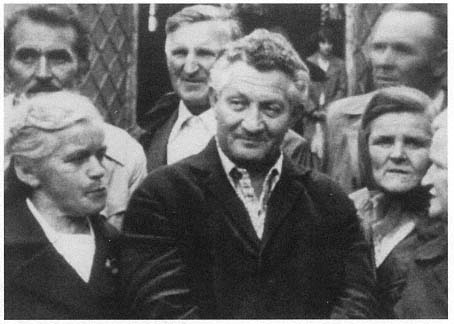
Shoah in Hebrew means "catastrophe". It is a term for the Holocaust. This is widely regarded as the definitive film on the subject. At nine hours it is too short for the territory it covers. Moreover, film has never scaled such heights of verisimilitude.
It is a documentary with an unusual format. There is no use of historical footage or images to which we have become immunized by familiarity, and which have over time become no more than a subject of morbid incredulous fascination. The movie consists entirely of interviews of people who directly or indirectly experienced the events as victims, perpetrators or bystanders. It takes the form of a non chronological mosaic and the same person appears more than once to take up the thread of narrative. It also takes us to the places where these things happened--the remains of the camps, crematoria and gas chambers and to the monuments erected in the memory of the vanished populations. Even stones can tell tales.
We relive these happenings along with the the persons interviewed. It is said that the voice reaches out to the soul more than images. These are no actors as they recollect memories too intense, too personal, too sacred, oftentimes shameful and indeed so horrible that in many cases they have been pushed into the subconscious mind. We participate through their expressions, silences and tears. They break down in different ways. We see graying men breaking into tears and sobs and can surmise the ghastliness of their memories, as the reality of the past dawns anew like a landscape illuminated by shafts of lightning. It is a great service to the world to have captured and frozen for eternity this tale told by the real expressions of real men as they recollect what they lived through.
Many Jews were recruited from the victims-to-be as manpower to run the death factories. A few of them who survived are among those who testify. Of course no witness could emerge from the chambers. You have to keep reminding yourself that these are actual interviews of actual people and everything they are telling us really took place.
The film constructs the vast canvas of events spreading over many countries-- government departments, villages from which the Jewish community was evacuated before the vernichtung (extermination), inhabitants of the Warsaw ghetto, officials of the German government-- through a vast accumulation of detail. We come to understand with seemingly clinical detachment about how the bureaucratic machinery churned to achieve the logistically impossible target of wiping out an entire race, leaving no traces of the crime. We talk to a train driver who transported the suffocating, thirsty, dying men, women and children. We talk to the German deputy administrator of the ghetto, as he cringes and lies during his inquisition. We listen to a senior Nazi camp administrator, as he pours out with a measure of complacency his knowledge of intricate details of the system, unaware that the interview is being video-ed, contrary to the promise of anonymity given to him.
We learn the depth of the pits, the dimensions of the "funnel" leading to the chambers. We are told how the mass of bodies falls out of the doors to the gas chambers like "asphalt" after the gas has done it's work, along with shit, vomit, blood, urine, torn flesh. The mangled bodies form into a pile in the course of the death struggle to reach the higher elevations in the chamber, since the gas rises upward from the pellets of Zyklon thrown on the floor. The entire process took about twenty minutes but could even be instantaneous depending on your location within the chamber. The area is cleaned spotlessly within minutes by the lucky temporarily reprieved Jewish slaves as the bodies progress along this assembly line towards the crematorium. From life to ashes is two to three hours.
I learnt for the first time about the screen of silence which enveloped the operation called the "Final Solution" so that each link in the chain knew only of it's own role. It went beyond secrecy. It was something which was simply never mentioned, either on paper or in spoken words. Everybody knew exactly what they had to do and bureaucratic momentum carried forth the entire operation like the most routine of official duties. It is this industrial efficiency and impersonality which distinguishes it from anything else in history. If so, the German people were largely unaware of the liquidations. Indeed, even the victims know of their intended fate only after they are literally pushed into the chambers--are not told, refuse to believe if they suspect and even refuse to believe when it becomes patently clear. One of the most illuminating testimonies is that of Raul Hilberg, the Austrian American Jewish professor who immigrated in 1938, the world's foremost authority on the Holocaust.
We learn of the matter-of-fact tone of a directive to the manufacturers of gas-vans, the mobile gas chambers, ordering changes to be made in the designs so that the load-the human cargo-is "processed" efficiently with least cost and damage to the "facility". The concentration camps are factories where the product is death and production targets have to be met. We also visit the Warsaw ghetto along with Jan Karski, a Christian professor, as he recalls the stench and sight of naked corpses festering in the street--a blazing inferno, as he recalls in considerable agitation (all but foaming at the mouth), "not of this world, not of this world!"
The interviews are punctuated with shots surveying the idyllic countrysides where this happened, the conifers swaying in the breeze in a kind of feigned ignorance. The black steam trains captured in a variety of moods criss-cross the film as a powerful metaphor.One of the compelling shots in the film is of a painting at the Auschwitz Museum depicting the contorted mass of naked bodies inside a gas chamber seen in the final throes. Another three dimensional model depicts the crematorium in all it's detail with the victims undressing prior to the gassing. This is the nearest we get to the actual events visually.
The length of the film is appropriate to it's aim. It shares with us a record dispassionate in it's clarity and truth and exhibiting these all too recent events in their different dimensions. I rub my eyes as I realize this was for real. And as Lanzmann remarks, it's not about the German's, it's about the claws hidden deep within human nature. Either way, it could have been either of us.
Roger Ebert's review
Richard Bernstein's review
Friday, July 16, 2010
City of Life and Death

Not even the Japanese deny the atrocities that took place in Nanking in the winter of 1937. The only debate is about the figures. For a film about the events coming from China, this is surprisingly balanced, and even though what we see is sickening, the realities must have been worse, since there are limits to what the camera may dare, or the human mind absorb. Both the victims and perpetrators are human beings, and history in that sense is a many sided mirror in which we can see ourselves kaleidoscoped. The devilish nature inherent in all human beings is the culprit in etching this inferno which seems right out of Dante.
This is a state sponsored film. It is all the more surprising that some of the Japanese officers are shown in a positive light. It shows the magnanimity and maturity of the film makers not to have painted the events in a monotone of nationalistic hate mongering propaganda. This more than compensates for the simplistic narrative which is justified since the film is obviously one with a high investment targeted at a mass market. The closing sequence of the movie is particularly moving . The truth must lie somewhere between the stubborn denials on the part of sections of the Japanese and the most lurid depictions. The Japanese as a race were no more unmitigated monsters than the Nazi's as the post war reversal shows. Such tragedies have been repeated in many places and merely show how helplessly and easily people can be sucked into committing the unspeakable by seemingly uncontrollable forces in the surroundings. War is a self perpetuating vicious cycle. A current of understatement and effort to understand runs through the film. This I find amazing, something quintessentially Oriental. Imagine a similar thing vis a vis the SS.
The black and white photography is luminescent as the camera roves through the smoking charred remains of the ancient city. The tanks rumble through the avenues. The clatter of marching boots fills the air. The citizens are reduced to wailing, shrieking helplessness. It is awesome to see how effectively we have learnt the art of harnessing human power to wage war and to subjugate others. We are shown how one group of people armed with superior instruments of slaughter united by a common purpose can hold another similar looking group less equipped and less organised in abject thralldom. The science of war is one of the most highly developed branches of know-how. We dignify war with song, dance and ritual. Those proficient in war constitute aristocracies. One of the most scary sequences in the movie is of a Japanese war dance, as the formation of soldiers advances with bizarre movements to the accompaniment of the beats of a giant drum as if to celebrate their victory before the sun god. It seems like a primordial ritual to accompany a blood bath. It is a celebration of naked aggression and the warlike spirit, the philosophy of the sword, the fruit of Japan's lightening westernization and adoption of "modern values". To paraphrase Voltaire, murder becomes laudable if committed in plurality and to the accompaniment of fife and drum. And by the victors.
Subscribe to:
Posts (Atom)