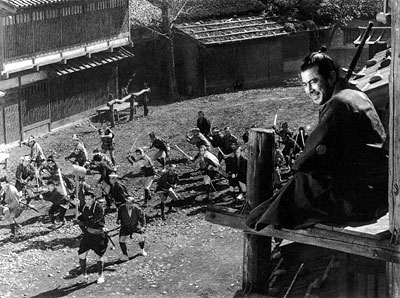
Whether he draws inspiration from the American western or vice versa is arguable, but certainly we have a fast action entertainer of the Sholay genre. The renowned film-maker once again puts his full cinematographic plumage on display. It also presumably displays a period of Japanese history, and the one lone fire-arm--a revolver which exerts considerable influence in the balance of power in the gang war--as symbolic of that country's emergence from it's feudalistic era to the period of rapid westernization, which started in the period in which the action occurs..
There is not much I find to write about. It's a film beautiful on the eye in it's dusty, grimy, wind-lashed setting. It resembles the grey, ramshackle, disintegrating world like Gold Rush. It is engrossing to observe the unfamiliar mannerisms, cadences of speech and body language. Bloodshed, violence, meanness, treachery--the full dose of villainy is there.
Sadly, the most popular of his films, both on it's home-ground as elsewhere. A good one, I guess, but just not my genre.
Kurosawa*90m*
Criterion Essay, Alexander Hanske
Roger Ebert's Great Movies Essay

